
Define Tensegrity
Tensegrity is defined as: “the characteristic property of a stable three-dimensional structure consisting of members under tension that are contiguous and members under compression that are not”. This concept was invented by Buckminster-Fuller, and is a general way of arranging elements into a structure. These structures often appear to float or support themselves by magic, because by arranging the pieces cleverly, it can be made to look like strands of rope are supporting in compression, rather than in tension like they actually are.
The Initial Idea
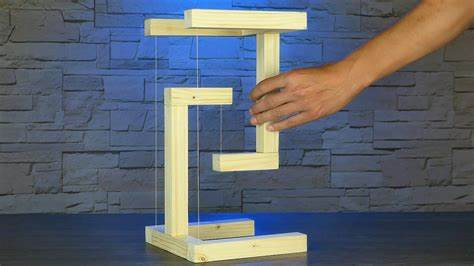
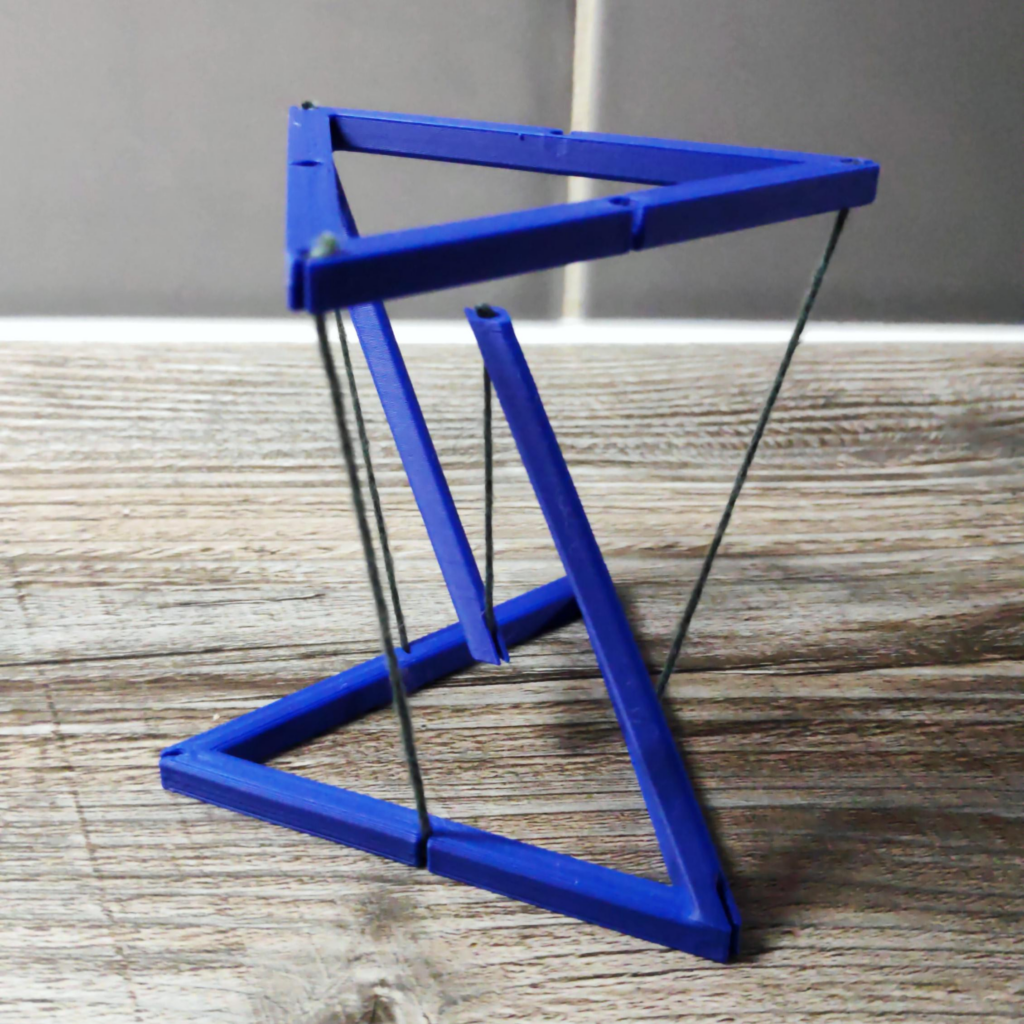
In the Spring of 2023, I decided to design a nice side table using the “tensegrity” principles. After doing some research, I settled on a basic concept that uses one of the most classic and repeated tensegrity structures. Here was some inspiration:
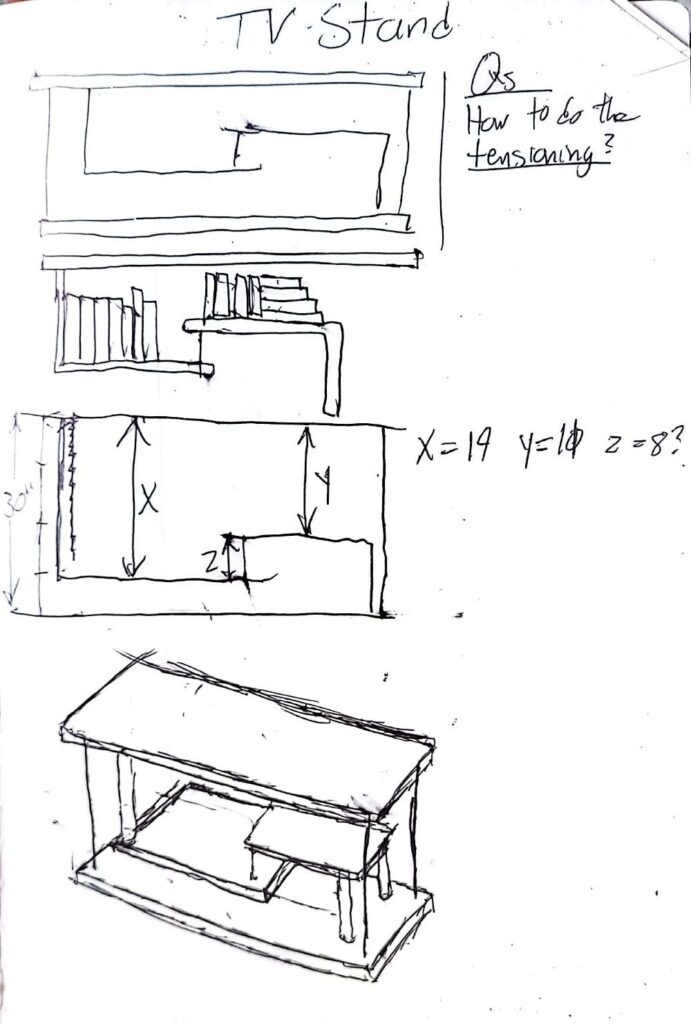
And here is my initial concept sketch
How will I do it?
From there, I started to think about other elements that would be necessary.
How would we attach the cables to the table surface?
Using T-Nuts hammered into the wood, we could put Eye bolts in, and then have the ability to loosen and tighten them a bit once installed
What would I use for the tension cables?
I couldn’t decide between steel cable or string, so I decided to experiment with the look and process of both methods
How would we ensure proper tension in the cables?
Turnbuckles could be used to tension the cables.
What could I use for the rigid supports?
I had a lot of extra conduit tubing on hand after building an MPCNC, so I decided to use it for the rigid supports, with 3D printed pieces that clamped onto the conduit and then screwed into the wooden pieces.
Designing it in CAD!
With the geometry set and some key questions answered about how it would be built, I went into CAD to do a first version, so that I could perfect the size and visual look of the table.
At the same time, I also did separate testing on the pieces that would attach the pieces of steel conduit to the wood.
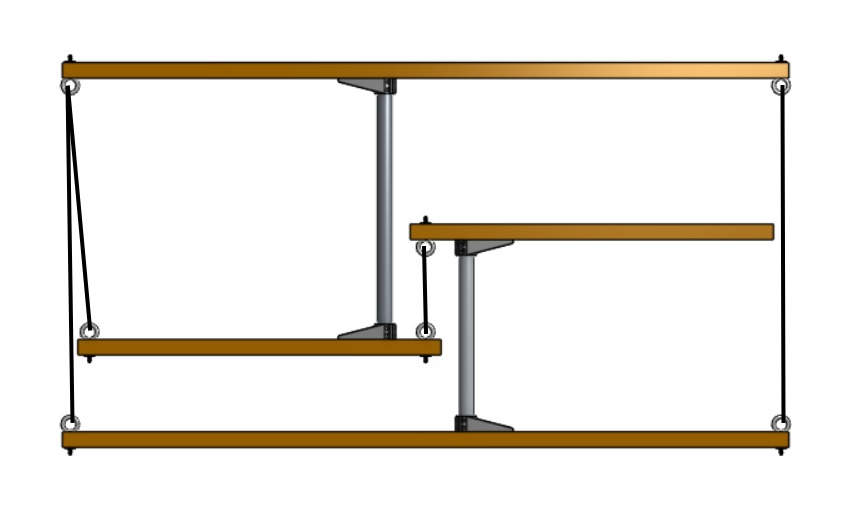

Building the Table
Using mostly components from my local hardware store, including pre-finished boards to simplify the process, I assembled the first version using string for the tensioned cables. One thing that I immediately found was difficult was that when tying knots in the string, it was difficult to get each string to be the same length, which is pretty important for maintaining the tension of the structure. While the turnbuckles do provide some ability to tension, they can only do so much, so this was challenging and took a while. Based on this experience, I decided to switch to steel cables. The cables provided the additional challenge of needing tools to cut and crimp the cables, but the tradeoff was that it was much easier to set equal distances among the cables on all 4 corners.
Final Product
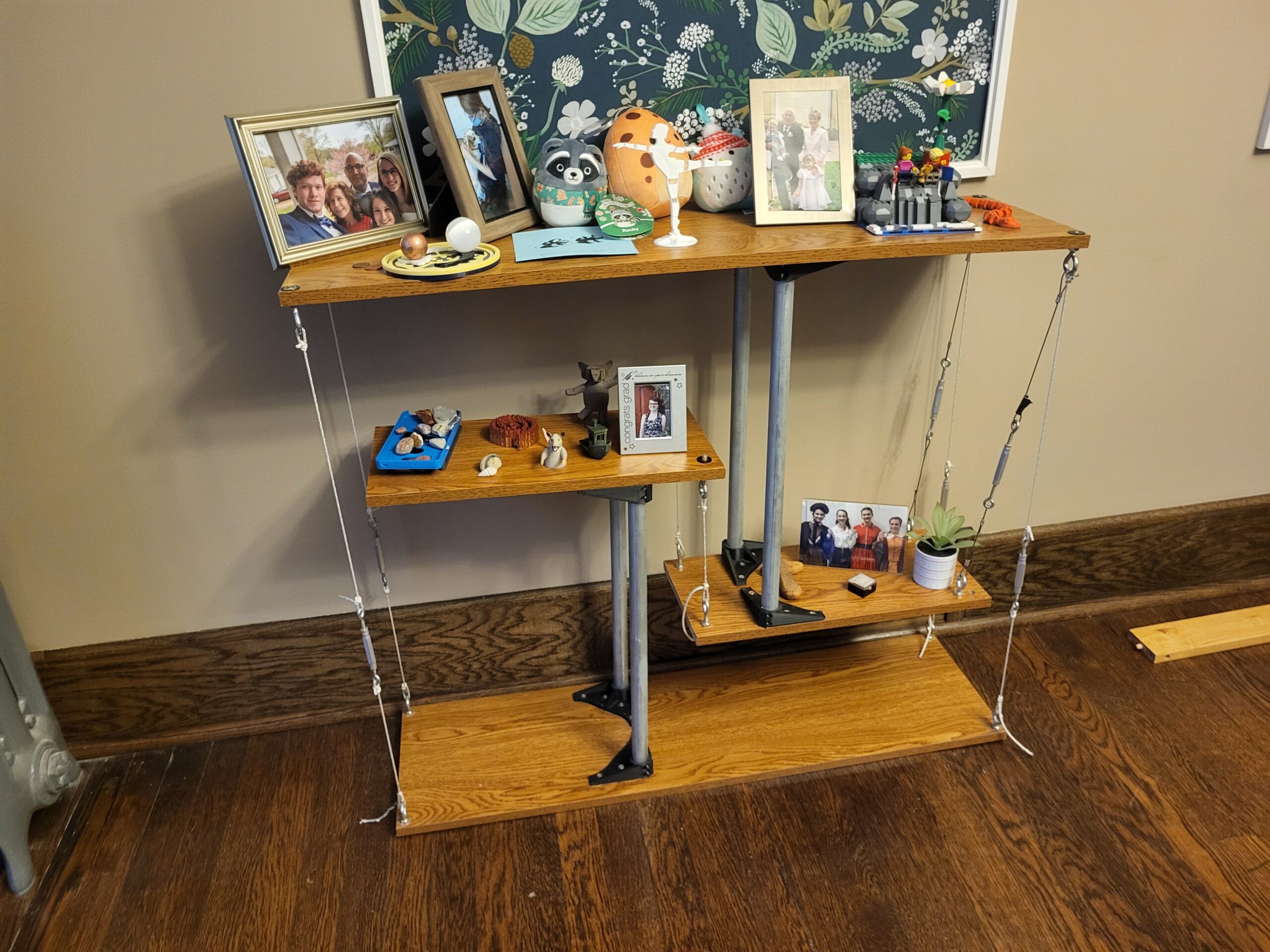
Overall, it came out pretty well, considering it was made with only a few hours of build time with all hardware store parts

Future Upgrades
After about a year, the table is holding up well. However, a few things have come up. One notable thing is that the cables put the wood under tension, causing it to bend slowly over time. Alarmingly, this caused one set of cables to slacken(due to the bending, the distances between mounting points had lowered) However, the structure is still about as stable without these cables in tension, suggesting that they might not be needed at all, which is quite interesting.
One other thing is that while the structure holds up well to the weight placed directly on it, it retains a lot of freedom in the rotational direction, meaning if it were to be bumped it could dislodge things placed on the table. In a future version, I think adding additional cables that go diagonally across the structure could provide stability against this motion.