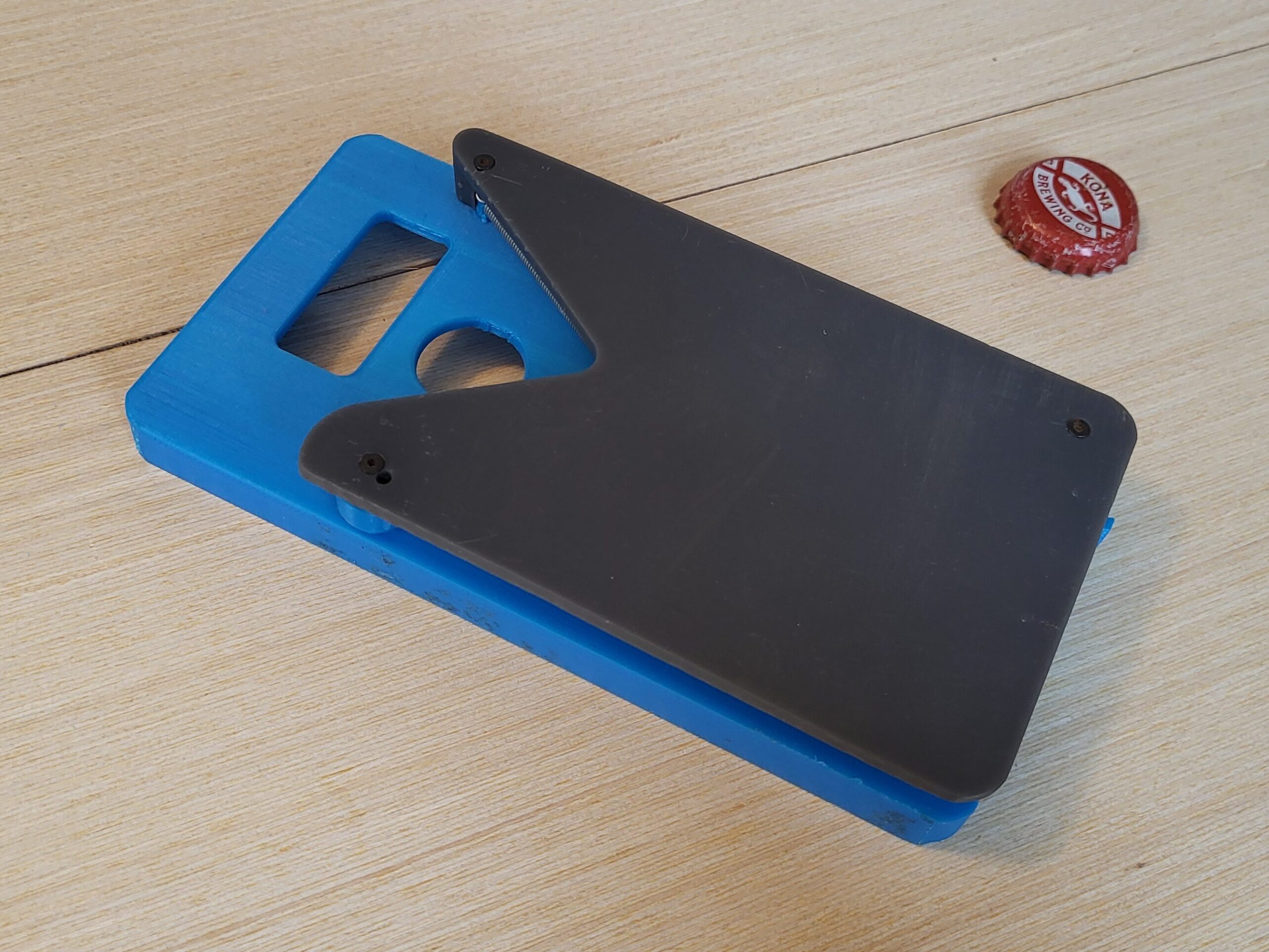
In the class ME348, advanced 3D printing, we learned all about methods of 3d printing such as ________. We were tasked throughout the glass to build phone cases with extra features, using the different methods of printing that we were learning about. I decided to make a novelty phone case that could take a cap off a bottle, and then be used to shoot the cap(at a low velocity, but ideally something that could reach ~15 feet of distance). While it may be possible to create springs with certain 3D printing method, the condensed timeline of the project meant that I would instead use metal springs, with the structures being 3d printed. My first thought was a linear spring shooter mechanism, as demonstrated below.

Based on the design concept, I did some math using Hooke’s Law to confirm that the spring force would not be too much for the user to pull. I used 4 equal springs in the interest of space constraint, as more powerful springs are usually thicker and I wanted to keep the design thin.

This design had a few challenges. The long bolts were used to constrain the entire sliding assembly so that it would only move in one axis. However, the interface between the bolts and the inside of the springs proved to have a lot of friction(threads catching on the edges between spring coils). When attempting to fire the shooter, the springs would often momentarily catch on the bolts, preventing the full energy from being transferred.
While this design could probably have been made to work with improvements to the spring-bolt interface, I decided that it might be easier to switch to a different design. After looking at some options, I settled on a catapult-like design. The main source of friction was the single pin at the base of the catapult arm, which I was more confident I could control with a bushing. Before proceeding with the design, I did some quick math that confirmed that the “catapult” or “tension spring” idea would work and gave me a starting point for sourcing springs.

From there I moved on to a concept design, putting the numbers from the design into the spreadsheet to ensure viability.

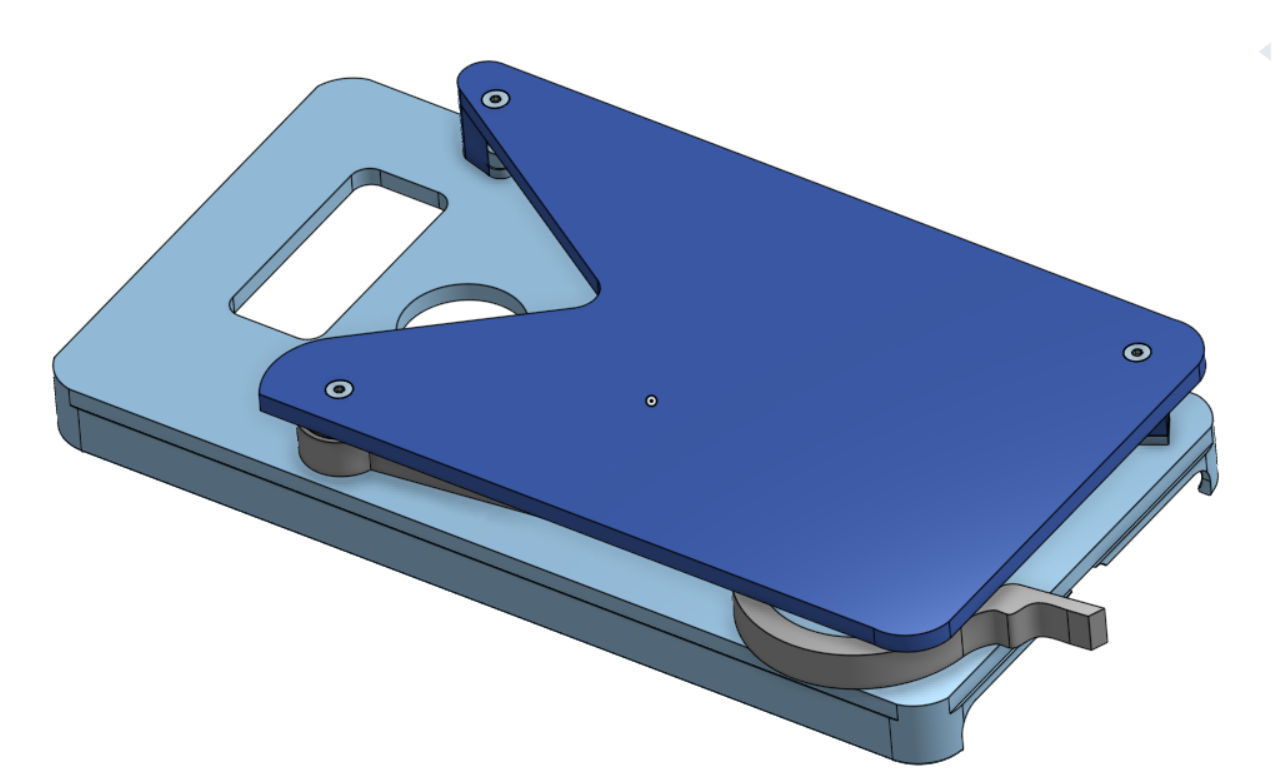
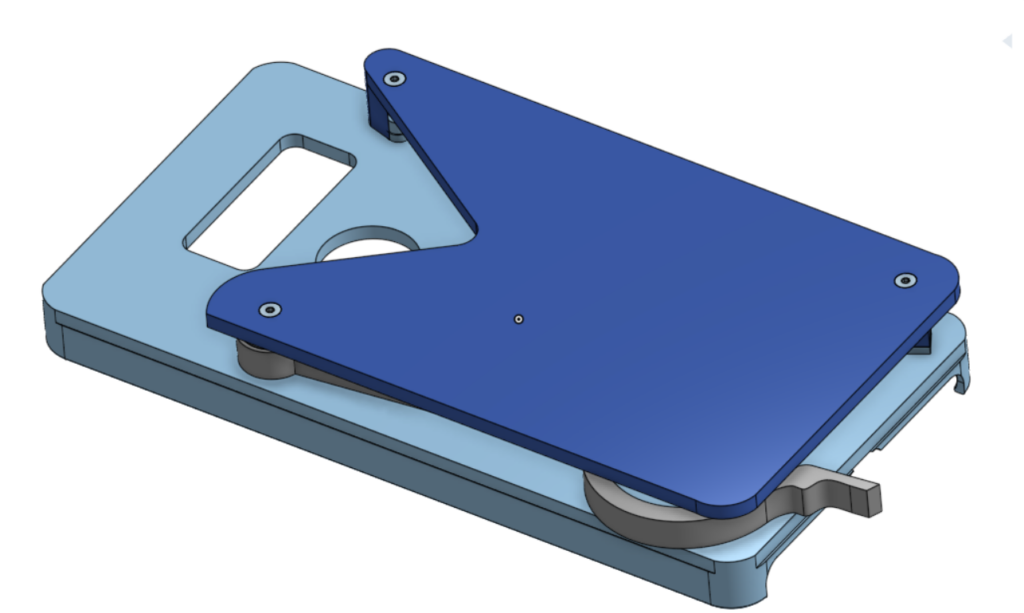
After fleshing out the concept into a printable design, I manufactured the first version. This version worked pretty decently. Sometimes, it was able to shoot 15-20 feet. However, there were occasional issues. Caps could become lodged in the cap chamber, especially the caps had gotten bent during removal. There were multiple ways to solve this problem. One option could be to widen the chamber. However, the case was already fairly thick(12mm) and I did not want to make it any thicker. So to solve the problem, I eliminated the walls of the cap chamber, letting the cap be bounded by the case and top plate on either side of it, as shown below. This worked quite well.

In the end, the phone case achieved its goal of launching a bottle cap 15-20 feet. It was not very accurate, but that was acceptable as it is challenging even for a human to throw a cap straight.